
The future of work: What trends will change HR?

In this article
Where is the world of work heading and what role does HR play in all of this? It is undeniable that the workplace is changing, and quite fast. With technology, employee expectations and social shifts, HR has a lot to do to keep up. But this is not just a challenge, it is also an opportunity to reinvent the way we work.
The opportunities of automation and artificial intelligence
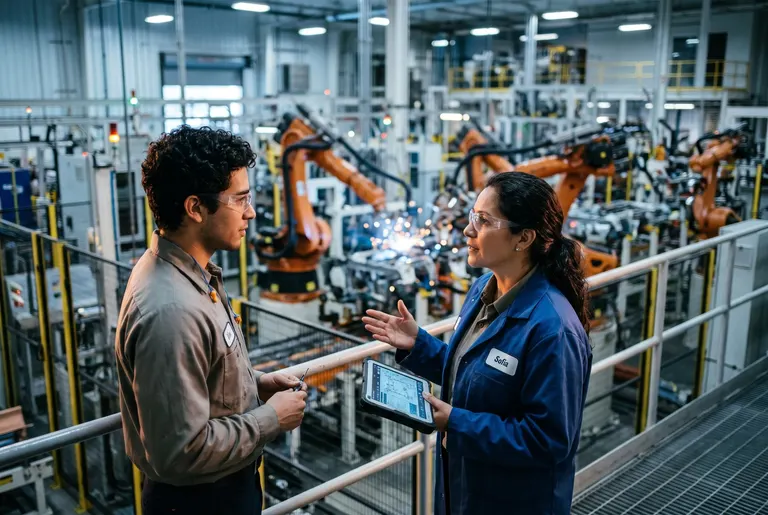
This is something we cannot ignore. Automation and artificial intelligence are starting to change how we work. Some tasks, especially repetitive ones, are already being taken over by machines, and others are changing completely. For HR, the challenge is how to help employees adapt and find new opportunities within this shift.
In this context, soft skills are more important than ever. How creative are you? Do you know how to collaborate? Are you good at solving problems? If not, it is time to learn. Here HR has a key role: designing training programs that help employees stay up to date and remain valuable.
Speaking of technology, collaboration between humans and machines is also on the rise. HR can do a lot to make this transition smooth, ensuring that employees have the support they need to learn how to work with increasingly advanced tools.
The hybrid model as the right balance
Remote work was a lifesaver during uncertain times, but it has its obstacles. There is isolation, a lack of face-to-face interaction, and the difficulty of maintaining team spirit. HR has to find ways to keep teams connected and engaged, even from a distance.
Hybrid models, which combine remote and in-office work, seem to be the answer. But for this to work, we need reliable technology. HR and IT teams must work together so that teams have the right tools to collaborate and stay secure.
An evolving company culture
Diversity, equity and inclusion (DEI) are more important than ever. HR can lead the change to make the workplace a more inclusive and respectful space. This is not only good for employees, but it can also drive creativity and innovation in the company.
Furthermore, organizational cultures must adapt to these changing times. HR can be the bridge between old and new ways of working, helping everyone find their place in this transition. In this article we discuss the key role of HR in leading cultural change.
The rise of the gig economy
More and more people are opting for freelance and project-based work. This poses new challenges for HR, especially in terms of hiring and managing external talent. And, of course, you have to make sure you comply with labor and tax laws. So yes, HR has a lot to think about.
More customizable career paths
Today, employees want flexibility and opportunities to grow in different ways. HR can help design career paths that are more flexible and aligned with individual aspirations.
Talent management in the digital age
The recruiting process is also changing. Now HR has technology and digital tools to attract and select talent more effectively. And not only that, the employee experience has become more important than ever. From day one until retirement, HR has the opportunity to create memorable experiences that keep employees happy and motivated.
HR analytics
Last but not least is the use of data and analytics. HR can use this to make more informed decisions and improve the effectiveness of its strategies. Who would not want more data to make better decisions?
In short, the future of work is full of challenges, but also opportunities. HR can lead the change and make sure all employees are prepared for what is coming. So, are you ready for the future of work? Labor Day is the perfect time to start thinking about it and taking action.