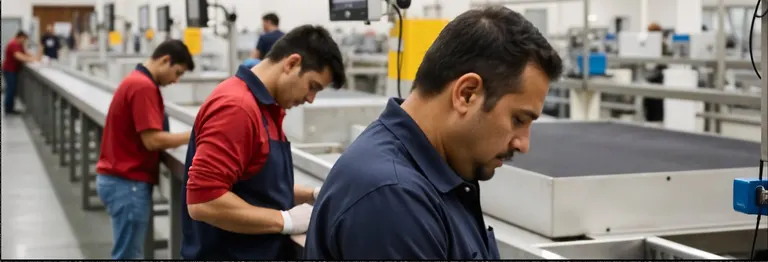

Improve connection with deskless workers and reduce turnover

The population of deskless workers, which includes a wide range of occupations (from retail workers to nurses and construction workers), makes up almost 80% of the global workforce. Despite their importance, these workers face significant challenges regarding communication, access to information, and having the right technology to perform their duties efficiently.
Today, with technology taking center stage, business leaders are beginning to understand the importance of providing their deskless workers with the same level of technological support as their desk-based employees.
According to a recent McKinsey survey, about 24% of employees have reported high company turnover rates. This number increases exponentially to 71% in companies where workers feel they need more technological tools. This figure aligns with reports indicating that almost half of retail deskless workers are considering quitting their jobs, with the lack of meaningful work being one of the top three reasons.
Below, we list the key strategies that HR departments can adopt to improve the deskless worker experience and operational efficiency in this segment:
- Access to information:
Deskless workers spend a large portion of their time looking for information.
Solution: HR should facilitate quick and easy access to emails, important company communication, and other critical updates through digital solutions and mobile devices.
- Improved top-down communication:
A lack of top-down communication affects performance reviews, management, and employee relations.
Solution: Implement practices like the "Gemba walk" to observe the facts and understand why things happen the way they do: What is going on? How many employees are overloaded, and how many have too much free time?
- Proper communication technology:
Dissatisfaction with the technology provided to do the job is common among deskless workers.
Solution: Ensure that workers have access to the right technological devices to facilitate communication and access to relevant information.
- Investments in the employee experience:
Although they represent 80% of the total workforce, only 1% of enterprise software investments go toward technology for deskless staff.
Solution: Invest more in technology and software that improve the employee experience, resulting in increased productivity and talent retention.
- Flexibility and improved scheduling:
Flexibility in hours and scheduling is crucial for improving the work-life balance of deskless workers.
Solution: Implement a software or system that allows workers to choose their shifts and facilitates self-scheduling, thereby increasing job satisfaction and operational efficiency.
- Careful planning of the employee experience (EX):
Designing a strategic and well-thought-out employee experience is essential to improve job satisfaction and engagement.
Solution: Adopt approaches similar to those used in marketing and sales by segmenting the workforce, creating target personas, and establishing clear metrics to measure the effectiveness of EX initiatives.
- Focus on retention:
Employee retention is essential to increase productivity and customer satisfaction, as well as to prevent employee turnover.
Solution: Invest in initiatives that improve the employee experience and address the needs and expectations of deskless workers, leading to greater loyalty and engagement.
By investing in the employee experience and addressing the specific challenges faced by deskless workers, companies can improve their operational efficiency, customer satisfaction, and talent retention. This results in greater long-term business success and a decrease in the problem of employee turnover.